

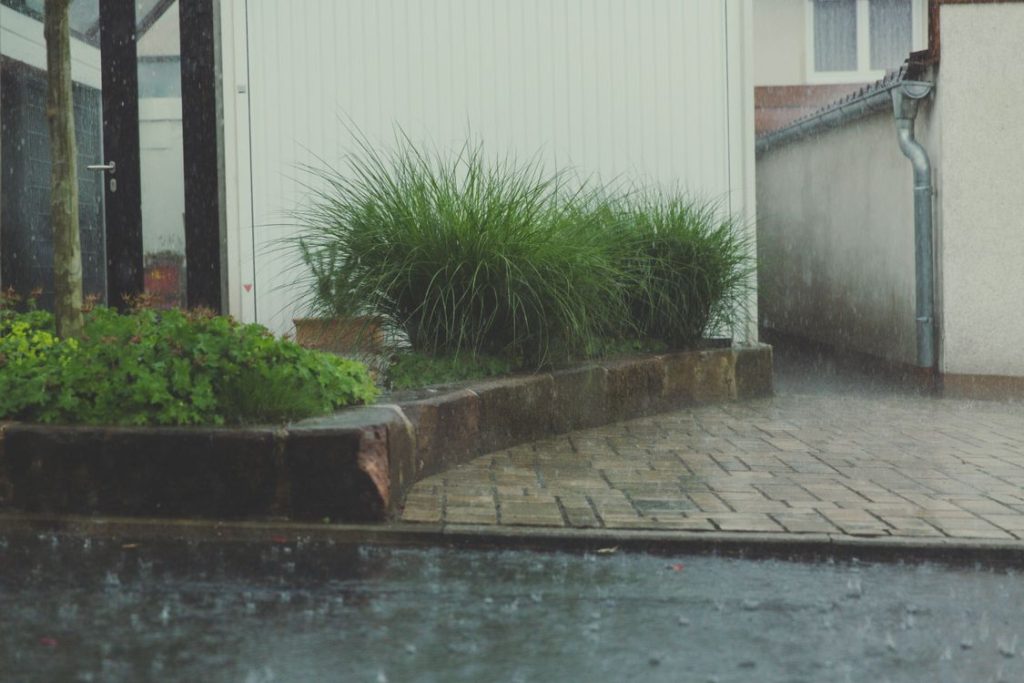
Most people first heard the phrase “atmospheric river” during a storm, usually while watching footage of a flooded freeway. The science behind the term is more orderly than the weather it describes, and it has quietly changed how San Diego County property owners think about water on their land.
The framework comes from Scripps Institution of Oceanography at UC San Diego, where researchers built a five-category scale to rank these storms. It is the same institution whose work underscores how consequential these events are: roughly 80 percent of levee breaches in California’s Central Valley are associated with landfalling atmospheric rivers.
Once you understand what the scale measures, the case for taking yard drainage seriously in a supposedly dry county gets a lot clearer.
What the Scale Actually Ranks
An atmospheric river is a long, narrow band of water vapor carried across the Pacific by strong winds. When it hits the West Coast and the air is forced upward over terrain, that vapor condenses into heavy rain. These storms deliver much of the region’s precipitation in just a handful of events each winter.
The Scripps scale, developed by researchers at the Center for Western Weather and Water Extremes, ranks these storms from one to five, with categories running from weak to exceptional. Crucially, it is built on two factors together: how much water vapor the storm carries and how long it lingers over a location.
That duration component is the clever part. A storm that sits over an area for more than two days gets bumped up a category, while a fast-moving one drops down, because research shows that strong vapor transport combined with long duration is what causes the worst impacts. A moderate storm that refuses to leave can do more damage than a stronger one that passes quickly.
For Southern California specifically, the strongest storms hitting the coast each year typically fall in the moderate-to-strong range rather than the extreme end. That sounds reassuring until you remember the duration rule: a moderate storm parked over saturated ground is exactly the scenario that overwhelms a yard.
Why Duration Is a Drainage Problem
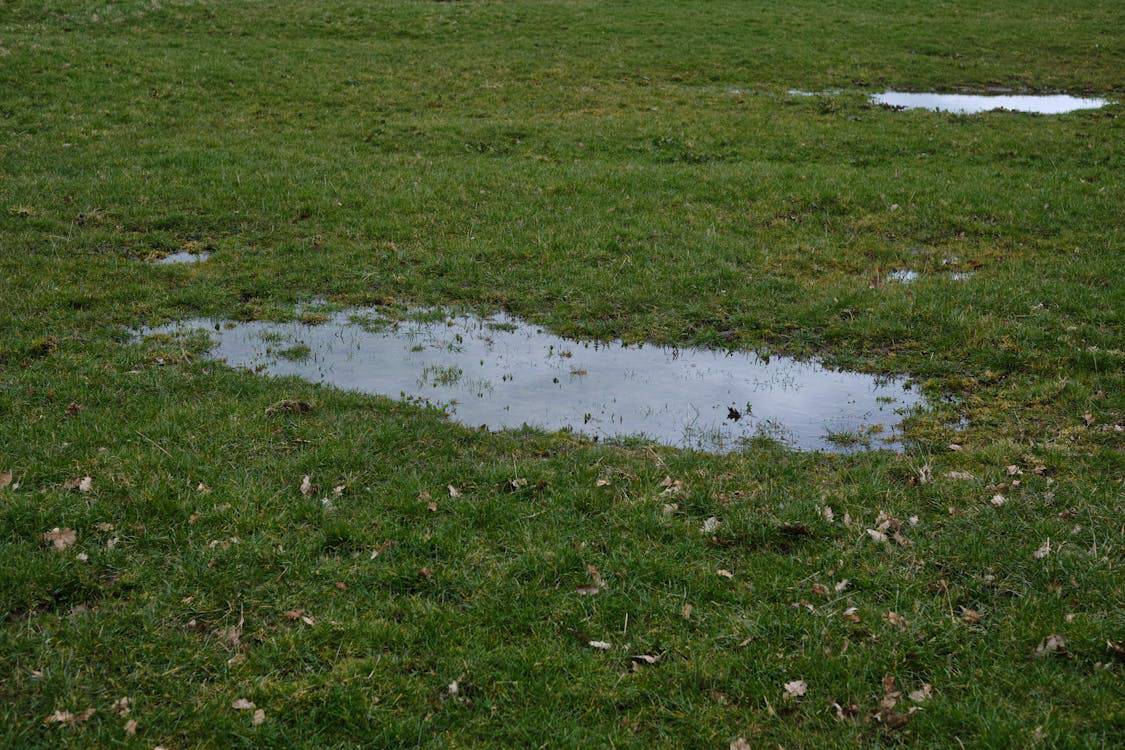
The scale’s emphasis on duration maps directly onto what goes wrong on residential property. Soil has a finite capacity to absorb water, and once it is saturated, everything after that becomes runoff with nowhere to soak in.
A short, intense burst can be absorbed or shed. A long-duration event is different, because it saturates the ground early and then keeps delivering water for hours or days onto a surface that can no longer take it. The back half of a lingering storm is when pooling, erosion, and pressure against structures accelerate.
This is also why a season’s storms compound. When atmospheric rivers arrive in sequence, each one lands on ground that has not fully drained from the last, so the soil’s buffer shrinks with every system. By the third storm in a cluster, a yard that handled the first one fine can be in real trouble.
The structures at risk are the costly ones. Water lingering against a foundation finds its way in over time, and water trapped behind a retaining wall builds pressure that can cause failure. Both are duration-driven problems, which is precisely what the Scripps scale was designed to flag.
Using the Forecast as a Planning Tool
The practical gift of the scale is lead time. When forecasters can communicate not just that rain is coming but how intense and how long-lasting a storm is likely to be, property owners get a window to prepare rather than react.
For a homeowner, that turns an abstract forecast into a checklist. A higher-category, long-duration storm in the forecast is the cue to confirm that water has a clear path off the property, that drains and outlets are not clogged, and that low spots near the structure are not where runoff is heading.
It also reframes drainage from a reactive repair into a standing investment. If the science says the region will keep seeing periodic long-duration storms on otherwise dry ground, then a designed water path, intercepting runoff before it reaches foundations and walls, is infrastructure for a known risk, not an overreaction to one bad winter.
None of this means every property needs the same solution, and a serious or recurring water problem deserves a professional evaluation of the specific site and soil. The scale describes the hazard in general terms; only a look at the actual lot can say what the right response is.
What the Scripps framework changed is the mindset. San Diego County’s dryness is real, but it is punctuated by storms that scientists can now rank, and the ranking makes plain that duration over saturated ground is the threat. Property owners who treat drainage as preparation for that specific pattern are reading the science correctly.
The scale also helps correct a common misjudgment. People tend to brace for the storms described as the most intense and shrug off the ones labeled merely moderate, but the duration rule says a moderate storm that parks overhead can be the more damaging event. Knowing that reframes which forecasts deserve attention and which preparations actually matter.
There is a planning rhythm that follows from all this. Before the wet season, it is worth confirming that drains are clear and outlets are open; during a flagged long-duration event, the priority is making sure water has somewhere to go; and after a storm, the runoff patterns it revealed become the blueprint for any improvements. The science supplies the warning, but the property owner still has to act on it.