

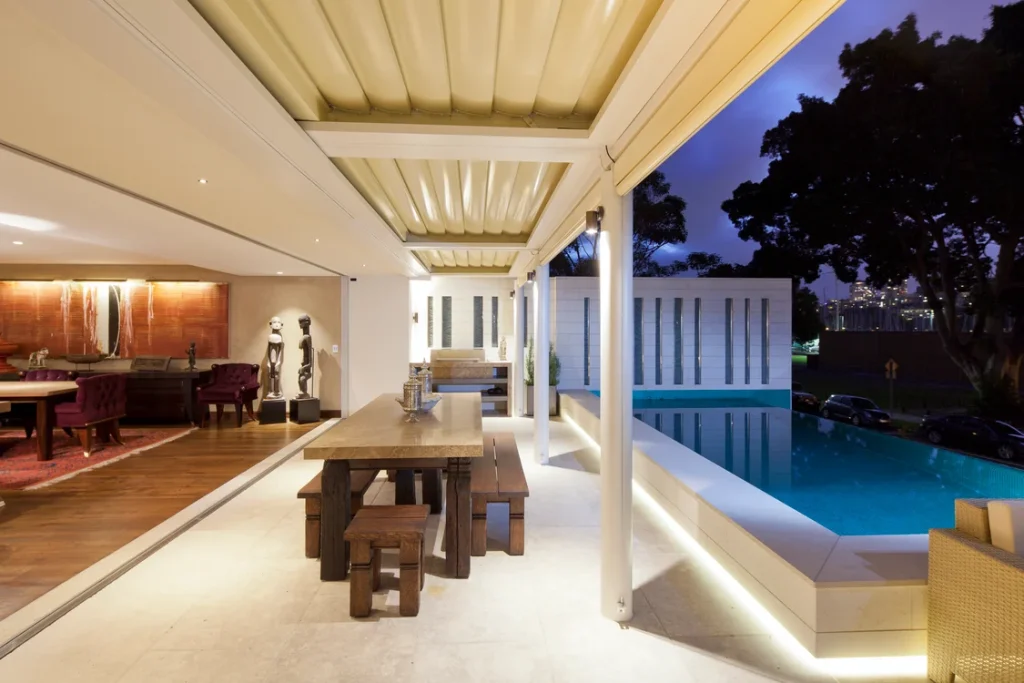
Outdoor lighting used to be an afterthought, a couple of bulbs by the back door and maybe a string of lights for parties. In Las Vegas, where the backyard is livable for much of the year and the power bill climbs hard every summer, the lighting choice has quietly become a small but real money decision.
The driver is a technology that has all but taken over residential lighting in the last decade. LED fixtures have moved from a premium novelty to the obvious default, and the reasons go well beyond the bulb itself.
For a desert patio specifically, the case for LED is stronger than the general efficiency pitch most people have already heard.
The Numbers Behind the Switch
The efficiency gap is not marginal. According to the Department of Energy, residential LEDs use at least 75% less energy and last up to 25 times longer than incandescent lighting.
That combination matters for a patio because outdoor fixtures tend to run for hours every evening and sit exposed to the elements between uses. A light that sips power and rarely needs replacing changes the long-term math on lighting a space you use nightly.
The lifespan piece is easy to underrate. Swapping a burned-out bulb in a hard-to-reach pendant or a recessed cover fixture is a chore, and a bulb that lasts years instead of months turns a recurring hassle into a non-issue.
The energy piece compounds across a whole patio. String lights, path lights, sconces, and accent fixtures add up, and at 75 percent less draw the difference between an LED setup and an old incandescent one is visible on a monthly bill.
The Heat Factor Nobody Talks About
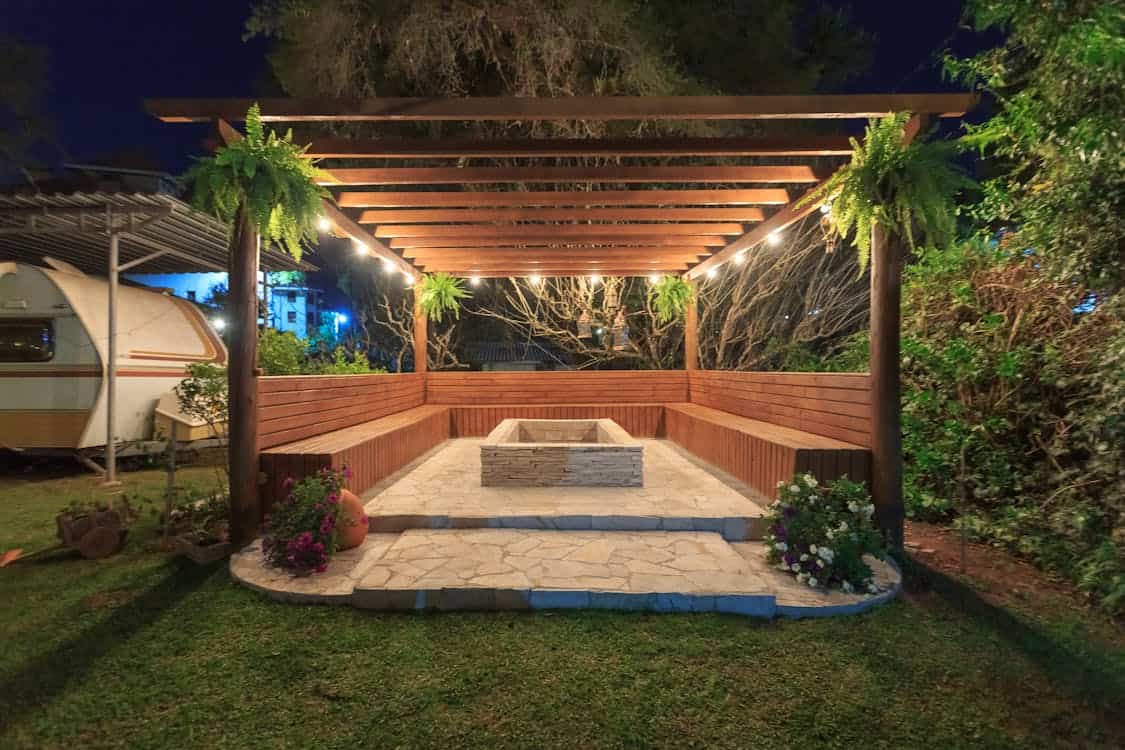
Here is the desert-specific angle that gets overlooked. Incandescent bulbs release the overwhelming majority of their energy as heat rather than light, while LEDs run dramatically cooler.
On a July evening in Las Vegas, when the air is still shedding the day’s heat well past sunset, the last thing a patio needs is a row of fixtures each radiating warmth like tiny space heaters.
Cooler-running lights make the covered space more comfortable in the exact months it gets used most, and they reduce a fire and burn risk that matters around fabric shades, dry landscaping, and curious hands.
The cooler operation also pairs naturally with the materials common on valley patios. LED string lights woven through an aluminum cover or pergola will not scorch or stress the surface the way hotter bulbs can over time.
How to Get the Most From an LED Patio Setup
Switching to LED is not quite as simple as buying whatever is cheapest, and a few choices separate a good outdoor setup from a disappointing one.
Color temperature is the first lever. Warmer tones create the relaxed, inviting glow most people want on a patio, while cooler tones suit task areas like an outdoor kitchen, and many LED products now let a homeowner tune between them.
Outdoor rating is the second. Desert patios still face dust, occasional rain, and big temperature swings, so fixtures rated for wet or damp outdoor use will outlast indoor-grade products pressed into service outside.
Controls are the third. Dimmers, timers, and smart switches let a homeowner run lights only when needed and at the brightness that fits the moment, stretching the efficiency advantage even further.
For a homeowner already investing in a covered patio, building LED lighting into the structure from the start is the cleanest path. The lighting ends up integrated, efficient, and cool-running, which is exactly what a Las Vegas backyard wants once the sun goes down and the bills come due.