

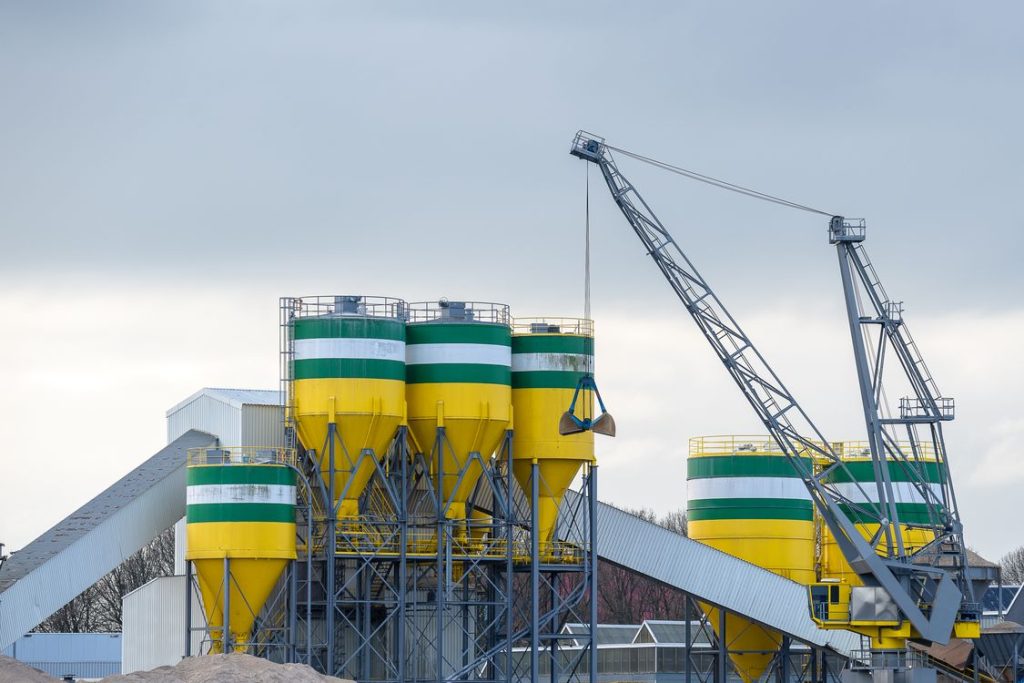
The cement industry has a word for what 2026 feels like. Not recession. Malaise. Demand hasn’t collapsed, but it hasn’t recovered either, and the forecast attached to that word suggests this isn’t a temporary lull waiting on the next construction cycle.
The American Cement Association’s most recent forecast lays out the mechanism plainly: elevated interest rates are expected to persist until at least late 2027, keeping residential and commercial construction, the traditional demand drivers for cement and cement silo throughput, from bouncing back the way they typically would.
A forecast with few catalysts for growth
The language in the industry’s own reporting is blunt. The association’s update describes few catalysts for meaningful growth in the near term and calls the broader environment a state of malaise expected to continue for a protracted period rather than resolve quickly.
That’s a meaningfully different message than a typical cyclical downturn forecast. Cyclical slowdowns come with a recovery story attached: rates ease, projects restart, demand normalizes. This one doesn’t offer that. It describes an extended plateau, a much harder environment for producers and the batching plants, precast facilities, and job sites that depend on a predictable supply chain.
One sector refuses to follow the trend
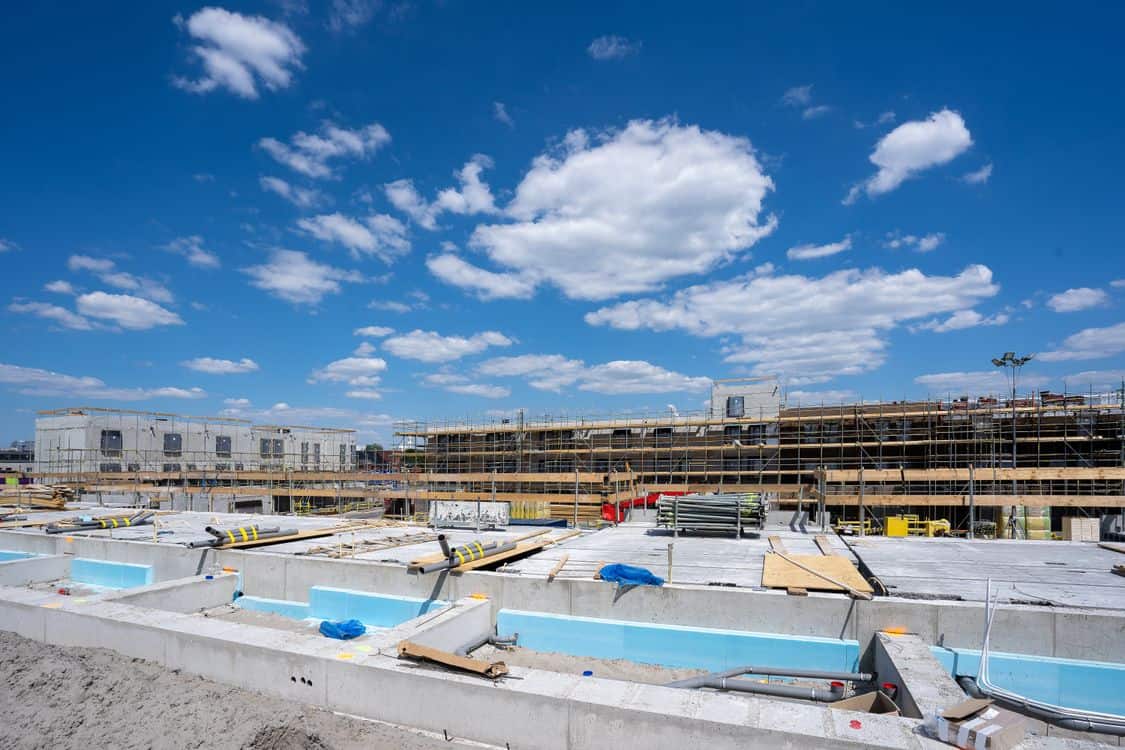
Data centers are the conspicuous exception. Their construction pipeline isn’t tied to mortgage rates or commercial real estate cycles. It’s tied to cloud computing and AI infrastructure demand, which has kept growing even as the rest of the built environment has stalled.
In the Rio Grande Valley specifically, billions of dollars in industrial investment are tied to construction activity that includes LNG export terminals, manufacturing facilities, logistics projects, data centers, and planned energy infrastructure. A cluster of project types that happen to be among the few still driving meaningful concrete demand in an otherwise flat market.
That regional pattern is likely repeating anywhere a data center campus, an LNG facility, or a large industrial buildout is underway. These projects consume enormous volumes of concrete for foundations, equipment pads, and containment structures, and unlike a subdivision that gets delayed if rates don’t cooperate, an AI infrastructure buildout tied to a company’s competitive position tends to proceed on its own schedule.
What a prolonged plateau means for silo and batching operations
For cement silo operators and batching plant owners, a market defined by malaise rather than collapse or boom creates a specific planning challenge. There’s no urgent crunch pushing new construction, but no clear signal that waiting for a rebound is smart either, given the forecast extends the flat period past 2027.
The operations that look best positioned are the ones tied to the sectors still growing, batching plants serving data center corridors, precast facilities supplying industrial energy projects, rather than those dependent purely on general residential and commercial activity. Silo configuration decisions matter more here too. Mobile, skid-mounted units offer flexibility for operations chasing demand in growth pockets, while fixed spiral or bolted silos suit a stable, unspectacular base of ongoing local demand.
A prolonged plateau also changes how operators think about capital spending on new silo capacity versus optimizing what’s already in place. In a growth market the calculus favors expansion. In a malaise market it tilts toward efficiency, getting more use out of existing storage and discharge systems rather than betting on a construction backlog that isn’t materializing. That’s translating into more interest in retrofit projects: adding dust collection, aeration, and level-sensing to older silos rather than building new ones. It’s a lower-capital way to get more value out of a plant’s existing footprint.
What’s happening in the Rio Grande Valley is worth watching because it’s not unique to that region. Anywhere LNG, data center, or industrial energy investment overlaps with an otherwise soft general construction market, the same split is likely showing up: demand tied to those specific project types holding up or growing, demand tied to conventional building staying flat or declining. For batching plant operators and cement silo owners planning capital through this stretch, the real question isn’t whether the broader market recovers on the old timeline. It won’t, at least not before late 2027. It’s whether their customer base includes enough of the sectors still growing to justify continued investment.
Some producers are hedging by diversifying customer contracts geographically rather than betting on a single corridor. A batching plant tied exclusively to one data center campus is exposed if that specific project slips or gets shelved, which happens more often in this cycle than developers like to admit publicly. Spreading supply agreements across two or three growth pockets, even at the cost of longer haul distances, has become a more common risk management move than it was when the broader construction market could be counted on to eventually pick up the slack. Nobody expects that habit to disappear once the forecast eventually improves.
Labor availability has become part of the calculation as well. Batching plants tied to data center or LNG construction schedules often need to staff up quickly for a compressed pour schedule, and finding qualified operators on short notice has gotten harder in regions where several large projects are competing for the same skilled labor pool at once. Some operators have started cross-training staff across multiple facility types specifically to have more flexibility when a project’s schedule shifts on short notice, which happens often enough on data center builds to plan around.